Spring in New Hampshire is one of those seasons you have to earn. After months of freezing temps, heavy snow, and stubborn ice patches, your lawn is ready for some serious attention — and so are you. The problem is, there’s a lot to do, and the order in which you do it actually matters.
This checklist walks you through the essential spring lawn prep tasks for NH homeowners, from the moment the snow melts to the point where your lawn is actively and healthily growing. Bookmark this and work through it top to bottom — it’s roughly the right sequence.
Step 1: Wait for the Right Conditions Before You Start
This might be the most important step on the list, and it’s the one most people skip. Before touching your lawn, make sure:
- Snow has fully melted — including those stubborn shaded areas
- Soil is firm enough to walk on without leaving deep footprints
- Daytime temperatures are consistently at or above 40°F
Working too early on waterlogged soil compacts it, damaging the turf root structure before the growing season even begins. In Seacoast NH, that ready window is typically late March to mid-April. Inland communities like Lee and Barrington may run a week or two later.
Step 2: Full Yard Cleanup — Leaves, Debris, and Winter Mess
Everything that blew in or broke down over winter needs to come off. This includes:
☐ Clear matted leaves — Left-over fall leaves that sat under snow are wet, compacted, and blocking light
☐ Remove sticks and fallen branches — Winter storms leave a surprising amount of debris
☐ Rake out dead grass and thatch — Gentle raking loosens the matted grass and lets air and sunlight reach the soil
☐ Check for snow mold — Gray or pink patchy areas with matted grass are signs of snow mold — a fungal issue common in NH winters
☐ Clear out planting beds — Pull dead annuals, cut back last year’s perennials, and rake out fallen debris from beds and borders
Snow mold, in particular, is worth paying attention to in NH. It develops under heavy snow cover and looks like grayish-white patches of matted-down grass. Most mild cases resolve on their own once the lawn dries out and has airflow. In severe cases, overseeding may be needed later in the spring.
Step 3: Edge and Define Your Lawn Borders
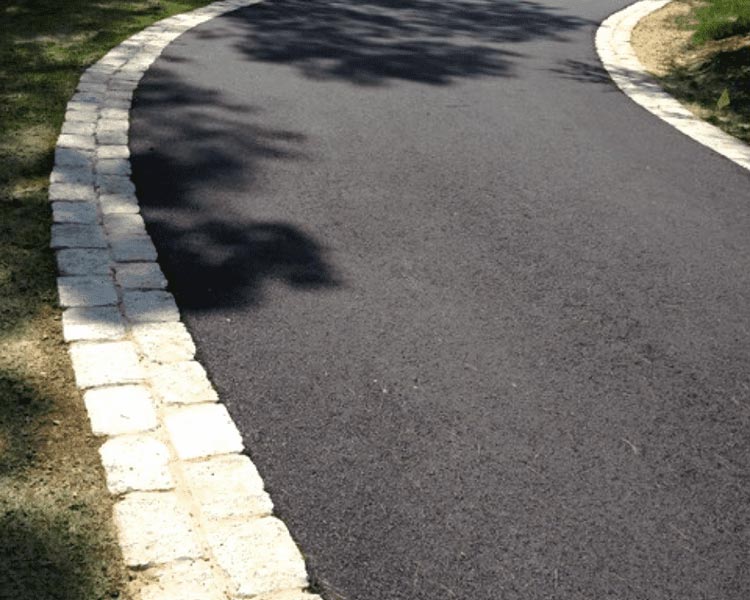
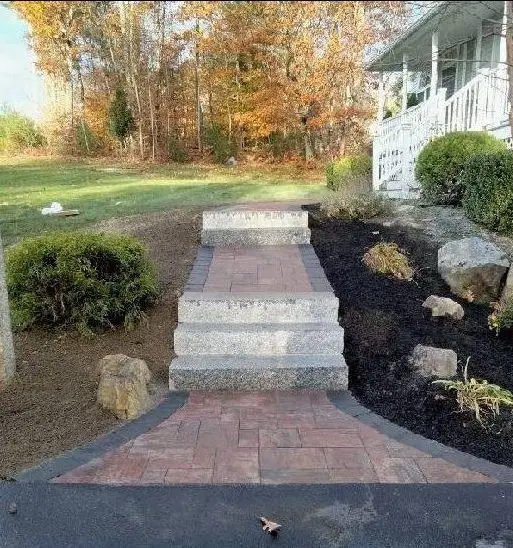
Crisp edges along driveways, walkways, and planting beds make a huge visual difference — and they’re most effective when done before the lawn fully wakes up.
☐ Edge along driveway and sidewalk — Clean edges prevent grass from encroaching onto hard surfaces
☐ Define planting bed borders — Re-establish clean lines between lawn and mulch beds
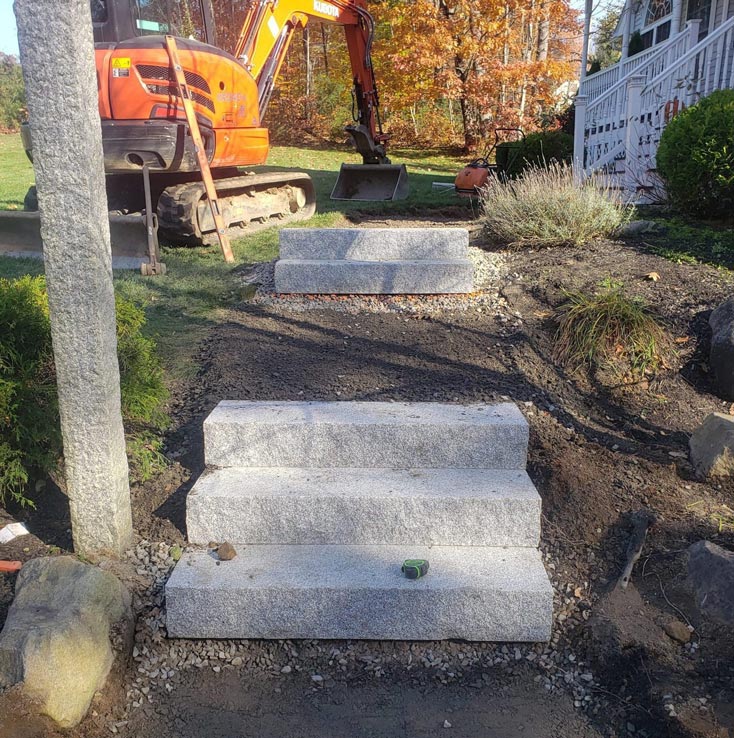
☐ Check for heaving near hardscaping — Frost heave can shift pavers and edging stones; reset any that have lifted
Step 4: Assess for Winter Damage
Walk the property slowly and look for:
☐ Bare or thin patches — From heavy foot traffic, snow plow damage, or salt runoff near driveways
☐ Salt-damaged grass near roads or walkways — Salt used for ice management leaches into the soil and can kill turf; these areas may need flushing or overseeding
☐ Damaged or broken shrubs and perennials — Prune back winter-killed branches to healthy wood; don’t prune before you can identify what’s alive vs. dead
☐ Frost-heaved plants — Cold temps can push shallow-rooted plants partially out of the soil; firm these back in gently
Step 5: Aerate (If It’s Been a Year or More)
Core aeration involves removing small plugs of soil to relieve compaction and improve water, nutrient, and air penetration to the root zone. In NH, this is most effective in spring or fall.
If your lawn sees regular foot traffic, has heavy clay soil (common in parts of Rockingham and Strafford County), or hasn’t been aerated in 1–2 years, spring is a great time to do it. Aeration pairs especially well with overseeding, since the open cores give new seed-to-soil contact.
☐ Aerate if soil feels compacted or water pools after rain
☐ Combine with overseeding for bare patches
Step 6: Overseed Thin or Bare Areas
Spring overseeding fills in patchy areas before summer weeds can take hold. Use a grass seed mix appropriate for NH — cool-season grasses like Kentucky bluegrass, perennial ryegrass, and fine fescues are standard for our climate.
☐ Scratch soil surface lightly to improve seed-to-soil contact
☐ Choose seed appropriate for sun/shade conditions in each area
☐ Water lightly and consistently until seed germinates — Typically 10–14 days
Step 7: Apply Pre-Emergent or First Fertilizer Application (Timing Is Key)
Fertilizing too early is a common mistake. Applying nitrogen before the soil is warm enough encourages top growth at the expense of root development. In NH, aim for when soil temperatures consistently reach 50–55°F — typically late April to early May for Seacoast communities.
If you’re applying a pre-emergent herbicide for crabgrass prevention, timing is especially critical: it needs to go down before soil temps hit 55°F, which is about when crabgrass begins to germinate. If you’re overseeding, do not apply pre-emergent — it will prevent your grass seed from germinating too.
Need Help Getting Through the List?
For many NH homeowners, the cleanup and assessment steps are the most labor-intensive part of spring prep — and the most time-sensitive. Getting those done early opens the door for everything else to go smoothly.
The Difference Landscapes provides professional spring cleanup services for residential and commercial properties across Portsmouth, Rye, Hampton, North Hampton, Exeter, Stratham, Lee, Dover, and the greater Seacoast and Southern NH area. View our Spring Cleanup Services to learn what’s included or to request a quote.