Fall is one of the most important seasons for your lawn — but also one of the most overlooked. Most homeowners focus their lawn care energy on spring and summer, then ease off when September arrives and the grass starts slowing down. That’s understandable, but Fall yard cleanup can retain the value of your landscaping.
The truth is, the care your lawn gets in fall directly determines how well it comes through winter and how quickly it bounces back in spring. In New Hampshire, where winters are long and heavy, that connection is especially important.
Here are the four essential lawn care services to prioritize every fall — and why they matter more than most people realize.
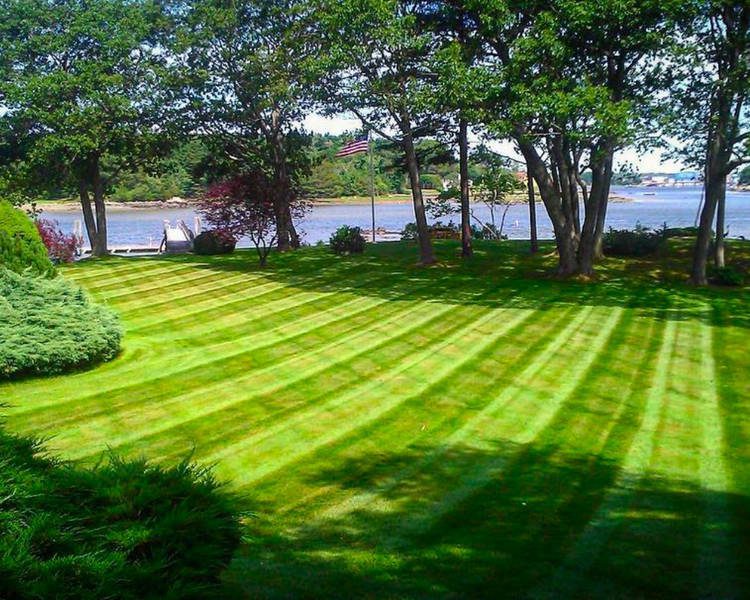
1. Final Mowing at the Right Height
Your last few mowings of the season matter more than most people think — specifically, the height you leave your grass at before the snow arrives.
Why height matters going into winter
Grass that’s too long heading into winter creates a serious snow mold risk. Long blades mat down under snow and create the dark, moist, oxygen-deprived environment that snow mold fungi thrive in. By the time the snow melts in spring, you may be left with large patches of gray or pink matted grass that needs significant rehabilitation.
Grass that’s too short is equally problematic. Short turf is more susceptible to cold damage, has less energy stored in the root system, and may struggle to re-establish in spring.
The right height for NH lawns
For most cool-season grasses common in New Hampshire — Kentucky bluegrass, perennial ryegrass, and fine fescues — the ideal final mowing height is 2.5 to 3 inches. This is slightly lower than the 3 to 4 inches recommended during peak summer, but high enough to protect the root zone from cold stress.
Don’t drop to this height all at once. If you’ve been mowing at 3.5 to 4 inches during summer, gradually lower the height over your final 2 to 3 mowings to avoid stressing the grass.
Continue mowing as long as the grass is growing — typically into October in the NH Seacoast and early October inland. Stop mowing only when growth stops, not when it slows.
2. Core Aeration
Fall is the single best time of year to aerate your lawn in New Hampshire. Soil temperatures are still warm enough to support root activity, but air temperatures are cooler — reducing the stress on the grass during recovery.
What aeration does
Core aeration involves removing small plugs of soil from across the lawn. This relieves compaction that builds up from foot traffic, mowing, and just the weight of a growing lawn over time. Compacted soil blocks water, air, and nutrients from reaching the root zone where they’re needed most.
After aeration, you’ll see small soil cores scattered across the lawn — these break down within a few weeks, adding organic matter back to the surface. The holes they leave behind allow water and fertilizer to penetrate more effectively all season long.
Why fall timing is ideal
Aerating in fall pairs naturally with overseeding and fertilization. Seeds dropped into aeration holes have excellent soil contact and establish well before the ground freezes. Fertilizer applied after aeration reaches the root zone more directly, making fall the most efficient time to strengthen your lawn’s root system before winter.
- Best timing for NH Seacoast: mid-September through mid-October
- Avoid aerating when grass is drought-stressed or during heat spells
- Water the lawn the day before aeration if soil is hard or dry
3. Leaf Raking and Full Yard Cleanup
This one might seem obvious, but how and when you handle leaf removal makes a significant difference in your lawn’s health.
The snow mold connection
In New Hampshire, leaves aren’t just unsightly — they’re a winter health hazard for your lawn. When leaves accumulate and then get buried under heavy snowfall, they create a matted, oxygen-deprived layer right against the grass crowns. This is the primary environment where snow mold develops, and it can be difficult to predict how severe the damage will be until the snow melts in spring.
Removing leaves before the ground freezes is one of the most direct, preventable actions you can take to protect your lawn from snow mold.
Full yard cleanup vs. leaf management alone
Effective fall cleanup goes beyond just handling leaves. A complete fall yard cleanup includes cutting back perennials and ornamental grasses, cleaning out planting beds, removing debris from hard surfaces, and assessing the overall condition of the lawn and plantings before the cold settles in.
Cutting back perennials in fall prevents dead plant material from becoming a winter home for pests and disease. Clearing beds ensures that moisture doesn’t pool and freeze around plant crowns. These tasks are easy to defer — and easy to regret in spring.
When to do the final cleanup
For most NH Seacoast properties, the ideal fall cleanup window is October into early November. Aim to finish before the first hard frost (usually late October to early November in coastal areas), but don’t rush into the yard before leaves have fully dropped from trees like oaks, which can hold leaves into November.
Many homeowners plan two passes: one in October for the main leaf drop, and one in early November for the final drop from late-holding trees.
4. Fall Fertilization
Of all the fertilizer applications you make during the year, the fall application is the most important. Fall fertilization — often called a “winterizer” — does something different from spring or summer feeding: instead of pushing leaf and blade growth, it strengthens the root system to help the lawn survive winter and emerge strong in spring.
What a winterizer application does
A proper fall fertilizer is higher in potassium and lower in nitrogen than a summer formula. Potassium helps the plant build cellular strength and cold hardiness. It also helps the grass manage water uptake and resist disease during the wet, cold months ahead.
Applied at the right time, a fall fertilizer keeps the root system active even as above-ground growth slows. The nutrients are stored in the roots over winter and available immediately when growth resumes in spring — giving you an earlier, stronger green-up without a heavy early-spring feeding.
Timing in New Hampshire
Aim to apply fall fertilizer in September through October — when the grass is still actively growing but temperatures have started to drop. Applying too late (after a hard frost) means the grass can’t absorb the nutrients effectively. Applying too early means more of the nitrogen goes into blade growth rather than root strengthening.
- Ideal window: late September through mid-October for NH Seacoast
- Use a slow-release potassium-rich formula designed for cool-season turf
- Avoid high-nitrogen quick-release formulas late in the season
Ready to Set Your Lawn Up for a Strong Spring?
These four services — final mowing, aeration, leaf cleanup, and fall fertilization — work together as a system. Each one prepares your lawn for a specific challenge of the NH winter, and each makes the next spring’s work easier and more effective.
The Difference Landscapes provides professional fall cleanup and seasonal lawn care services for residential and commercial properties throughout Portsmouth, Rye, Hampton, North Hampton, Exeter, Stratham, Lee, Dover, and the greater Seacoast and Southern NH area. Visit our Fall Cleanup Services page to learn more or schedule service.